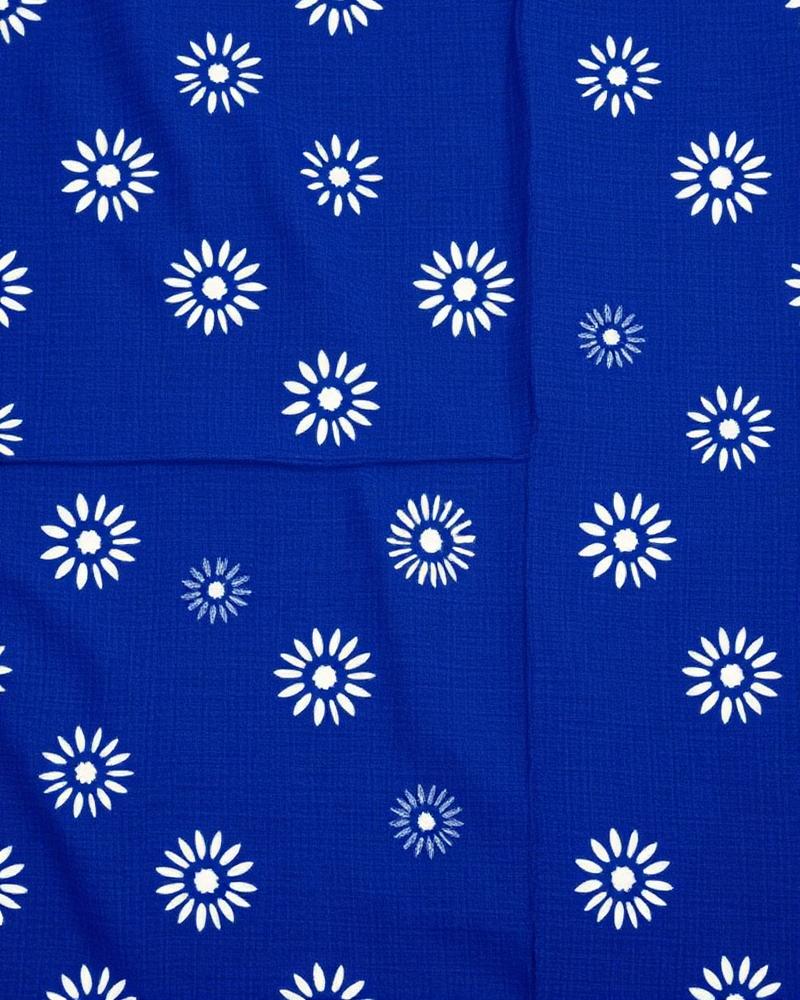
The presence of a hand-dyed indigo throw within a contemporary living space does not simply alter the room’s color palette—it fundamentally shifts its atmospheric weight. In an era dominated by synthetic dyes and volatile industrial production, living with natural indigo is an act of deep material connection. The rich, multi-layered blues extracted from the Indigofera plant do not sit flat on the surface; they interact dynamically with changing light, carrying centuries of botanical chemistry and artisanal labor directly onto our furniture.
Integrating these living textiles into the home embodies the philosophy of Sankofa—using an ancient, plant-based technological lineage to bring grounding, organic texture into the high-contrast architecture of modern spaces.
The Lifecycle of the Blue (The Alchemy of the Vat)
[Harvesting the Leaf] ──> Fermenting green leaves to extract the hidden indican compound
          │
[The Oxygen Shock]     ──> Whisking the liquid to introduce air, precipitating the blue pigment
          │
[The Living Vat]       ──> Reducing the dye in an alkaline solution where bacteria keep it alive
Material Diagnostics: Synthetic vs. Living Indigo
True indigo is unique because it does not bind chemically to the interior of the fiber; instead, it wraps physically around the exterior of the thread, creating a surface that beautifully mirrors the passage of time.
The Three Spatial Functions of Indigo
-
Luminous Anchoring: Placing a dark indigo textile in spaces with heavy natural light diffuses the glare, creating a cool, quiet focal point that balances cold materials like concrete, glass, or steel.
-
Tactile Dialogue: Layering a high-texture, hand-spun indigo throw over clean-lined, modern seating bridges the gap between sleek industrial design and raw, human-scale craftsmanship.
-
Living Patina: Embracing the natural, slow color transfer that happens as the textile interacts with the home—a beautiful testament to its living, breathing origin.
The Spatial Shift
Perspectives from the Vat
“Indigo is a living entity. It breathes in the vat, it matures with age, and when you bring it into your home, it continues to change alongside you. It is a color that cannot be rushed, and that patience is exactly what it brings into a room.” — Aboubakar Fofana, Master Indigo Dyer
Domestic Impact Metrics
-
Circadian Contrast: Introducing deep indigo accents into sleeping or resting zones replaces the sterile brightness of digital screens with a calming, natural shade that cues the body for rest.
-
Industrial Deceleration: Investing in a single, artisanal hand-dyed throw offsets the cycle of purchasing and discarding multiple low-quality, synthetic fast-homeware textiles.
-
Heritage Preservation: Maintaining a market for authentic indigo textiles directly supports the agricultural and creative livelihoods of traditional dyeing communities across West Africa and beyond.
