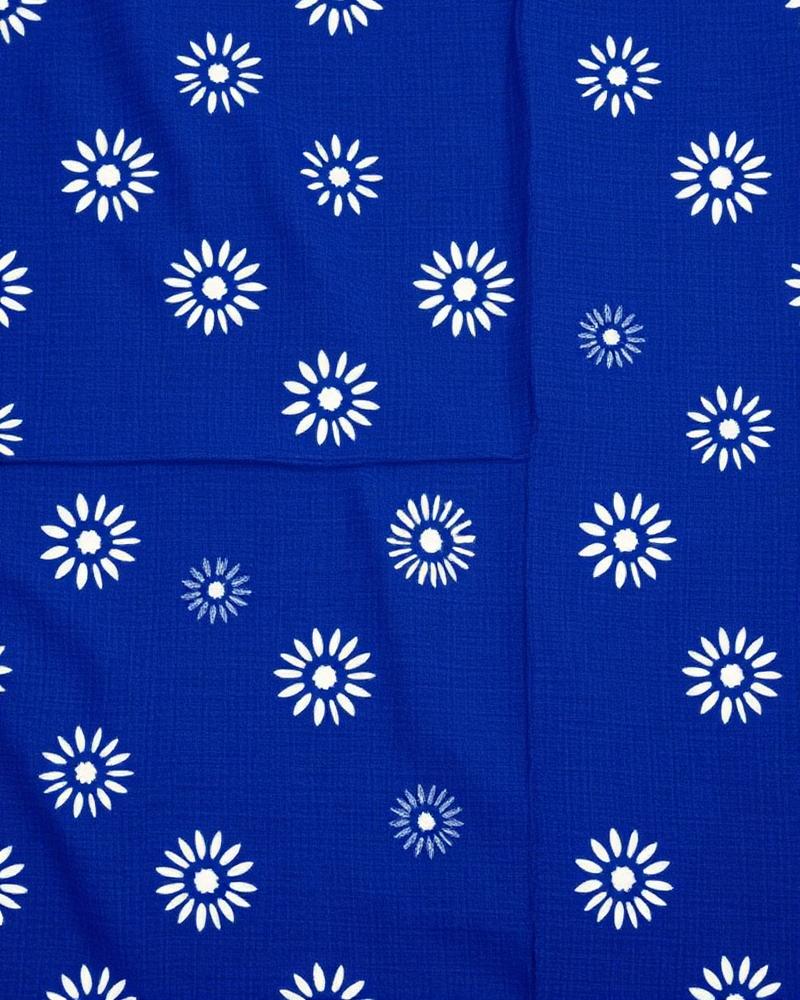
Adire, the traditional Yoruba indigo-dyed textile, is frequently categorized in museums as a static artifact—a beautiful but silent relic of the past. This classification misunderstands its fundamental nature. Adire is, and always has been, a dynamic visual language. It is a voice composed of intricate resist patterns, spiritual symbols, and abstract proverbs that communicate identity, status, and collective memory. Within modern spaces, its powerful indigo graphics break through the noise of industrialized uniformity, establishing a sophisticated visual anchor that bridges ancient technology and contemporary design.
This graphic resurgence embodies the principle of Sankofa—using the depth of an inherited visual dialect to articulate current identity and ensure cultural continuity.
The Alchemical Voice (The Layers of the Vat)
[The Raw Fabric] ──> Establishing the canvas; usually hand-spun, local organic cotton
          │
[The Silent Script] ──> Applying resist; using cassava starch paste (Adire Eleko) or raffia ties (Adire Oniko)
          │
[The Indigo Dip]   ──> Oxidizing the design; repeatedly plunging the fabric into the fermented, alkaline indigo vat
Visual Dialects: Stagnant Relic vs. Dynamic Voice
The distinction between viewing Adire as a historical curiosity and engaging it as a living language dictates how the material is preserved and utilized.
| Design Attribute | Adire as a Stagnant Relic | Adire as a Dynamic Voice |
| Material State | Encased in glass; fixed dimensions; designed for passive observation | Fluid integration; used in fashion, upholstery, and structural surfaces |
| Graphic Content | Abstract patterns viewed without context or historical literacy | Interlocking proverbs and symbols carrying specific societal messages |
| Color Profile | Faded indigo monitored strictly for environmental degradation | Living, deep blues that develop unique character with usage and light |
| Production Scale | Isolated, rare examples found in private collections | Active artisanal guilds scaling production for global markets |
| Cultural Stance | A finite, finished historical chapter | A continuously adapting visual language with future iterations |
The Three Anchors of Indigo Dialogue
-
The Proverbial Script: Utilizing specific Adire Eleko patterns, like Ibadandun (‘Ibadan is sweet’), where each grid motif tells a narrative about place, history, or social ethics.
-
The High-Friction Texture: Pairing natural, raw Adire cotton textiles against sleek, modern architectural materials like concrete, glass, and polished metal to create tactile contrast and spatial depth.
-
The Scaled Shift: Enlarging classic geometric Adire Oniko (tie-dye) patterns for use as dramatic upholstery on minimalist furniture, amplifying the graphic voice within a room.
The Spatial Shift
[Insert Image Here: A focused interior photograph showing a striking panel of indigo Adire textile, featuring intricate cassava-paste resist patterns, hanging behind a modern, dark-wood desk. A contemporary ceramic lamp sits on the desk, its light catching the deep blues and sharp white graphics.]
Voices from the Vat
“The ancestors did not create these patterns to be silent. The Aro Meta (three stones) symbol speaks to stability; the snake motif speaks to patience. To call Adire a relic is like calling a live conversation a recording. It is speaking to us, right now.”
— Nike Davies-Okundaye, Master Adire Artist and Cultural Advocate
Socio-Cultural Metrics
-
Visual Literacy Preservation: The active use of Adire keeps the knowledge of specific Yoruba proverbs and historical symbols alive and recognizable across generations.
-
Indigenous Economic Autonomy: Maintaining specialized indigo dyeing communities supports local artisanal guilds, preserving decentralized wealth and regional expertise.
-
Industrial Deceleration: Prioritizing slow, manual indigo resist-dyeing processes counters the ecological damage caused by high-volume, petrochemical-based fast fashion.
